What Happens When You Stop Taking GLP1?

What Happens When You Stop Taking GLP1?

If you’ve been successful with weight loss medications and are now wondering what happens when you stop taking GLP1, you’re asking one of the most important and most overlooked questions in modern medical weight loss.

GLP-1 medications are powerful tools, but they are not magic cures.

Understanding what happens when treatment ends is essential for protecting your progress, your metabolism, and your long-term health. This is why guidance from an experienced obesity medicine doctor at a reputable medical spa is critical, especially if you’re receiving care at Healthy Solutions MedSpa in Bucks County, PA.

In this comprehensive guide, we’ll break down exactly what happens when you stop taking GLP1, what changes to expect, and how professional medical oversight can help you transition safely and successfully.

Understanding How GLP-1 Works Long-Term

GLP-1 medications do not permanently change your biology. They support it while you’re taking them. That’s why understanding the discontinuation of GLP-1 is just as important as starting treatment.

GLP-1 as a Chronic Treatment

GLP-1 mimics a hormone responsible for:

  • Appetite control

  • Blood sugar regulation

  • Satiety signaling

When the medication is removed, your body gradually returns to its baseline hormone levels. This doesn’t mean GLP-1 “failed.” It means obesity is a chronic condition requiring long-term management.

Why Stopping GLP-1 Requires a Plan

Stopping GLP-1 suddenly without guidance from a weight loss doctor increases the risk of:

  • Rapid hunger return

  • Weight gain

  • Metabolic disruption

This is why professional oversight from a medical spa is essential.

What Happens When You Stop Taking GLP1: The First 2 Weeks

Appetite Changes

Many patients report:

  • Gradual return of hunger

  • Larger portion tolerance

  • Increased interest in food

This doesn’t happen overnight, but the appetite-suppressing effect begins to fade.

Digestive Shifts When Stopping GLP-1

Since GLP-1 slows stomach emptying, stopping it may cause:

  • Faster digestion

  • More frequent hunger cues

  • Changes in bowel habits

These shifts are normal physiological responses.

Weeks 3–6: Metabolic Rebound Phase

Hunger Hormones Return When Stopping GLP-1

Hormones like ghrelin (the hunger hormone) increase after stopping GLP-1. Without medical strategies in place, this can feel overwhelming.

Energy and Blood Sugar Changes

Patients may notice:

  • Energy dips

  • Sugar cravings

  • Blood sugar fluctuations

This is especially relevant for individuals with insulin resistance.

Weight Regain: What’s Normal vs. Concerning

Temporary Water Weight

Some weight gain after stopping GLP-1 is due to:

  • Increased glycogen storage

  • Fluid retention

This is not fat regain and can stabilize with proper nutrition.

Fat Regain Risks

Without a transition plan, studies show many patients regain a portion of lost weight.

This is why medical weight loss management doesn’t end when medication stops, it evolves.

Psychological and Behavioral Effects When Stopping GLP-1

Food Noise Returns

“Food noise”, or the constant thoughts about eating that often return after stopping GLP-1. Patients frequently say:

“I didn’t realize how quiet my mind had been.”

Emotional Eating Patterns

Stress eating and emotional triggers may resurface, especially without behavioral coaching.

Why Many Patients Regain Weight After GLP-1

Biology, Not Failure

Weight regain is not a lack of discipline. Your body is biologically designed to defend its highest weight.

Lack of Medical Support

Online-only programs rarely provide:

  • Tapering plans

  • Nutritional guidance

  • Ongoing accountability

This is why working with an obesity medicine doctor or medical spa matters.

How an Obesity Medicine Doctor Manages GLP-1 Discontinuation

Gradual Tapering Strategies

  • Rather than stopping abruptly, providers may:

    • Reduce dosage slowly

    • Extend dosing intervals

    • Combine lifestyle interventions

Alternative Medical Weight Loss Options

A comprehensive plan may include:

  • Other weight loss medications

  • Metabolic testing

  • Nutrition optimization

These strategies are commonly offered at Healthy Solutions Medspa.

Medical Spa Support After GLP-1

Healthy Solutions Medspa Approach to stopping GLP-1

Patients in Bucks County, PA benefit from:

  • Personalized transition plans

  • Ongoing provider monitoring

  • Sustainable weight maintenance strategies

Healthy Solutions Medspa is able to provide patients’ continuity of care beyond medication.

Not necessarily. With medical support, many patients maintain most of their weight loss.

It’s not recommended. Gradual tapering under medical supervision is safer.

Typically within 2–6 weeks, depending on dosage and duration of use.

No. Obesity is a chronic medical condition influenced by hormones and metabolism.

Yes. A reputable weight loss center and medical spa like Healthy Solutions Medspa can provide the proper transition and maintenance care.

Healthy Solutions MedSpa, with the guidance of Dr. Michael Luciano, a Board Certified Obesity Medicine Doctor offers medically supervised GLP-1 weight loss programs.

Schedule Your Medical Weight Loss Consultation

In conclusion, after you stop taking GLP-1 medication, your appetite returns, your hormones recalibrate, and without a plan, weight regain becomes more likely.

But with guidance from a skilled obesity medicine doctor and continued care at a trusted medical spa, stopping GLP-1 doesn’t have to mean losing progress.

If you’ve been searching for a reliable medical spa near me or a weight loss doctor near me in Bucks County, PA, GLP-1 therapy may be the healthy solution you’ve been waiting for.

Schedule your medical weight loss consultation at Healthy Solutions Medspa or give our office a call. 

If you enjoyed reading this, you may also like reading What Is Your Body Mass Index (BMI)?, Semaglutide vs. Tirzepatide or FDA Update on Hormone Therapy for Menopause: What Every Woman Should Know.

What Happens When You Start GLP1? Powerful 7-Stage Medical Weight Loss Transformation Explained

What Happens When You Start GLP1? Powerful 7-Stage Medical Weight Loss Transformation Explained

If you’ve been searching for effective weight loss medications and wondering what happens when you start GLP1, you’re not alone.

Across the U.S., people struggling with obesity and metabolic conditions are turning to GLP-1 medications as part of medical weight loss programs offered by a trusted medical spa or an experienced obesity medicine doctor.

GLP-1 medications have transformed how clinicians approach sustainable weight loss.

Unlike fad diets or extreme exercise plans, these medications work with your body’s natural hormones to support appetite control, blood sugar regulation, and long-term health improvements.

In this comprehensive guide, we’ll explore exactly what happens when you start GLP1, from your first injection to long-term results, so you can make an informed, confident decision with your weight loss doctor or medical spa, especially if you live in or near Bucks County, PA.

Understanding GLP-1 Medications

GLP-1 stands for glucagon-like peptide-1, a naturally occurring hormone released in your gut after you eat.

When you begin GLP-1 therapy, you’re essentially enhancing a hormone your body already uses to regulate appetite and blood sugar.

What GLP-1 Hormones Do in the Body

GLP-1 hormones:

  • Signal your brain that you’re full

  • Slow stomach emptying

  • Reduce hunger hormones

  • Improve insulin sensitivity

This combination is why people often report eating less without feeling deprived when starting treatment through a medical spa near or a certified obesity medicine doctor.

Common Types of GLP-1 Weight Loss Medications

These medications are typically prescribed as part of medical weight loss programs and may include:

  • Weekly injections

  • Clinically compounded options

  • FDA-approved formulations

A professional consultation ensures the medication and dosage match your personal health needs.

Why Doctors Prescribe GLP-1 for Medical Weight Loss

Obesity as a Chronic Medical Condition

Obesity isn’t about willpower. It’s a complex medical condition involving hormones, metabolism, and genetics.

That’s why modern weight loss medications focus on biological pathways rather than calorie restriction alone.

Role of an Obesity Medicine Doctor:

An obesity medicine doctor:

  • Evaluates metabolic health

  • Prescribes evidence-based treatments

  • Monitors progress and safety

  • Adjusts medication over time

This level of care is commonly available at a reputable medical weight loss center like Healthy Solutions MedSpa in Bucks County, PA.

What Happens When You Start GLP1: The First Week

The first week is when many patients notice subtle, but meaningful changes.

Appetite Changes

Most people experience:

  • Reduced hunger

  • Feeling full sooner

  • Less interest in snacking

These changes often happen within days, even before weight loss begins.

Digestive Adjustments

Your digestive system is adapting. Mild nausea, bloating, or constipation may occur as your stomach empties more slowly.

This is normal and usually temporary when monitored by a weight loss doctor.

Weeks 2–4: Early Weight Loss Changes

Reduced Cravings

Cravings for sugar, fried foods, or late-night snacks often fade. Patients report better food choices without forcing discipline.

Month 2–3: Metabolic and Hormonal Adaptations

GLP-1 improves insulin response, helping prevent energy crashes and intense hunger spikes, especially helpful for patients with insulin resistance.

Fat Loss vs. Muscle Loss

Under medical supervision, GLP-1 supports fat loss while preserving lean muscle, especially when paired with protein intake and light resistance training.

Energy Levels

As blood sugar stabilizes and inflammation decreases, many people notice:

  • Better sleep

  • Increased stamina

  • Improved mood

These benefits reinforce consistency with medical weight loss programs.

Healthy Solutions Medspa

Long-Term Results With GLP-1

Average Weight Loss Outcomes

Clinical studies show patients may lose between 10% to 20% of their body weight over time when GLP-1 is combined with medical supervision.

Lifestyle Integration

GLP-1 works best alongside:

  • Nutrition coaching

  • Behavior modification

  • Ongoing provider support

This is why local care from medical professionals at a medical spa often leads to better long-term success than unmonitored online prescriptions.

GLP-1 Side Effects and Safety

Common Side Effects

  • Nausea

  • Constipation

  • Fatigue

  • Reduced appetite

These usually improve with dose adjustments.

Rare but Serious Considerations

GLP-1 medications are not suitable for everyone. A full medical evaluation at a trusted medical spa or by an obesity medicine doctor ensures safe use.

GLP-1 at a Medical Spa vs. Online Programs

Personalized Medical Weight Loss

At a professional medical spa:

  • Dosages are customized

  • Progress is monitored

  • Side effects are managed proactively

Why get GLP1 therapy at Healthy Solutions MedSpa

Choosing Healthy Solutions MedSpa in Bucks County, PA gives patients access to:

  • Licensed medical providers

  • Evidence-based care

  • Ongoing accountability

  • Reputable facility with over 600 five-star Google reviews

This approach is far safer than searching endlessly for a weight loss doctor near me online without vetting credentials.

Some people notice changes within the first two weeks, while visible weight loss typically appears within the first month.

Strict dieting isn’t required, but healthier choices enhance results.

When supervised by an obesity medicine doctor, GLP-1 is considered safe for long-term use.

Yes, but transition planning with your provider is essential to prevent weight regain.

Yes. Many reputable medical spas offer GLP-1 as part of medical weight loss programs, including at Healthy Solutions Medspa.

Clinics like Healthy Solutions Medspa provide medically supervised GLP-1 programs locally.

Schedule Your Medical Weight Loss Consultation

So, what happens when you start GLP1?
You don’t just eat less, you gain control over your appetite, metabolism, and long-term health.

When prescribed and monitored by a qualified obesity medicine doctor at a trusted medical spa, GLP-1 becomes a powerful tool for sustainable transformation.

If you’ve been searching for a reliable medical spa near me or a weight loss doctor near me in Bucks County, PA, GLP-1 therapy may be the healthy solution you’ve been waiting for.

Schedule your medical weight loss consultation at Healthy Solutions Medspa or give our office a call. 

If you enjoyed reading this, you may also like reading How Weight Loss Can Affect Your Face and Body and the Treatments that can Help You Look and Feel Your Best or FDA Update on Hormone Therapy for Menopause: What Every Woman Should Know

What Is Your Body Mass Index (BMI)?
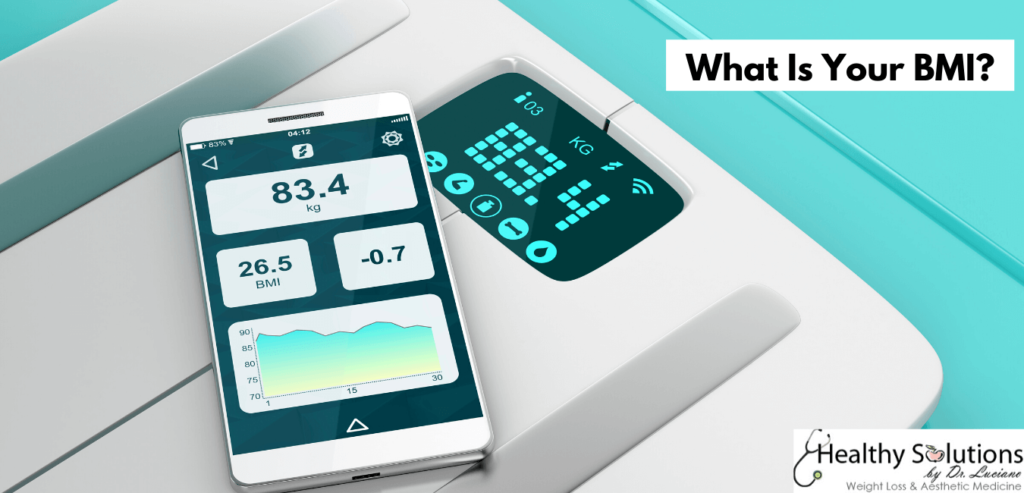
 What Is Your Body Mass Index (BMI)?

What Is Your Body Mass Index (BMI)?

BMI was first introduced in 1830-1850 by a Belgium astronomer.

The modern term “Body Mass Index” (BMI) for the ratio of human body weight to squared height.

It was coined in a paper published in the July 1972 edition of the Journal of Chronic Diseases by Ancel Keys.

BMI is universally expressed in kg/m2, resulting from mass in kilograms and height in meters.

Why Calculate BMI?

A person’s BMI can be used as a screening tool for weight issues.

However, it is not indicative of a person’s overall health.

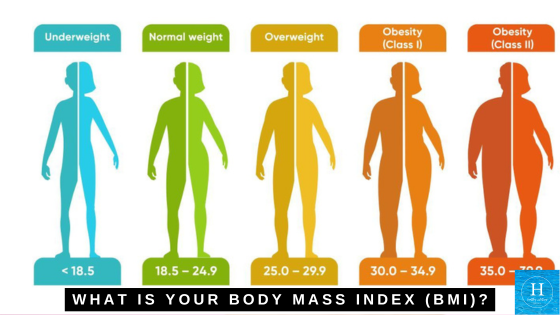
BMI is used as a general rule to determine if an adult patient is underweight, normal, overweight, obese or morbidly obese.

BMI Ranges:

Underweight: Less than 18.5 BMI

Normal: Between 18.5 and 25 BMI

Overweight: Between 25 and 30 BMI

Obese: Between 30 and 35 BMI

Morbidly Obese: Over 35 BMI

So What Is Your BMI? Calculate your BMI With Our BMI Calculator:
ft
in
lbs
cm
kg


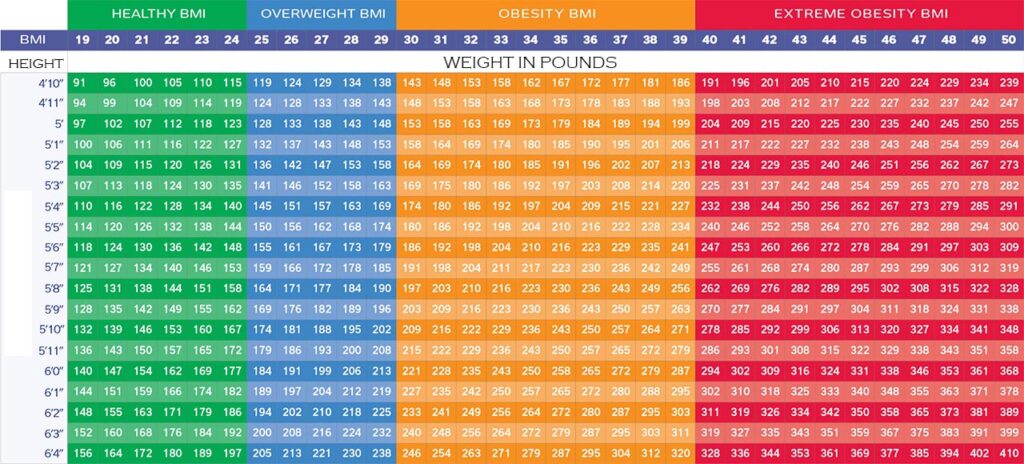
BMI Table For Adults:

BMI Table

For Children ages 2-20, BMI is used differently as a comparison with other children of the same age.

Children below 5 percent BMI are considered underweight and obese if they are above 95 percent BMI compared to other children their age.

BMI roughly correlates to increasing heart disease, diabetes, arthritis, and other chronic diseases.

There is some debate about BMI and it’s use and accuracy.

Can BMI be misleading?

BMI can be misleading in those patients with larger than average muscle mass and higher than average fat mass.

An example where BMI does not correlate with health status would be a body builder with low body fat that may screen with an obese BMI.

Another example would be a middle aged female with normal BMI may actually have very high body fat percentage and low muscle mass (aka- skinny fat).

The important factors that make up weight are muscle and fat.

Definitions of ‘overweight’ based on body fat percentages use a male threshold of 25% body fat and female of 33%.

Studies show that BMI may average a 2-point discrepancy when analyzing bod fat percentage.

BMI for Women vs. Men

Women vs Men BMI

Women carry more body fat then men typically.

There is debate whether there would be different overweight cut off values for men and women.

However, men usually carry more muscle which weighs more.

Knowing these variables using body composition will help shed more light on a patient’s true health status and help health care providers better direct patients on their health risks and nutrition and exercise goals.

BMI is a quick screening tool that can help establish some risks but ultimately each individual patient should be assessed based on their actual body fat percentage.

Dr. Michael Luciano Bucks County, PA

If you are located near Doylestown, Warrington, or Newtown, PA or the surrounding cities and are interested in learning more about your BMI or need help losing weight, schedule a medical weight loss appointment with Dr. Luciano.

There are more accurate tools that Dr. Luciano utilizes in his practice such as our Body Composition Test.

Did you learn something new or liked this article? Why not share it!

You may also enjoy readingIntroducing Bioidentical Hormone Therapy at Healthy Solutions Medspa: A New Era of Wellness

Semaglutide vs. Tirzepatide

Tirzepatide vs semaglutide

Tirzepatide and Semaglutide are two medications used for the treatment of type 2 diabetes, and more recently for weight loss. 

The two drugs belong to different classes of drugs and have some differences in their mechanisms of action, dosing, and efficacy.

Healthy Solutions Medspa offers both of these medications for those in our weight loss program.

What is Semaglutide?

Semaglutide is a GLP-1 receptor agonist.

It works by mimicking the action of the endogenous hormone GLP-1, which increases insulin secretion, decreases glucagon secretion, slows gastric emptying, and promotes satiety, resulting in improved blood sugar control and weight loss.

In much simpler terms, Semaglutide makes you less hungry due to increasing insulin secretion and your blood sugar control is improved, causing you to lose weight.

Semaglutide is FDA approved to treat type 2 diabetes under the brand names Ozempic, Wegovy, and Rybelsus.

However, only Wegovy has approval for use in managing weight.

What is Tirzepatide?

Tirzepatide works by stimulating the release of insulin and inhibiting the release of glucagon, leading to improved glycemic control and decreased blood sugar levels.

Tirzepatide is sold under the brand name Mounjaro.

Similar to Semaglutide, this medication makes you less hungry and aids in weight loss.

What is the Difference Between Tirzepatide and Semaglutide?

While tirzepatide targets both the GLP 1 and the GIP receptor agonist, semaglutide only mimics the GLP-1 receptor agonist.

This gets released by your gut after you eat to signal to the brain that you are full.

Are They Both Efficient?

Both tirzepatide and semaglutide have been shown to reduce weight for patients who are overweight or obese in randomized controlled trials.

Are They Both Safe?

Both tirzepatide and semaglutide are generally well-tolerated, but they may cause side effects such as nausea, vomiting, diarrhea, and injection site reactions.

How Do I Know Which is Right For Me?

The choice between Semaglutide and Tirzepatide  medications depends on individual patient factors, including treatment goals, preferences, and tolerability. It is important to consult with a healthcare provider to determine the most appropriate treatment option for each patient.

Contact us for your Weight Loss Consultation at Healthy Solutions Medspa and get started on your weight loss journey!

Or call us at 267-388-0300 and speak to one of our team members for all information on our program. 

If you enjoyed reading this, you maybe interested in reading some of our other articles below:

Realistic ways to lose or not gain weight during the COVID outbreak

Many people that are in quarantine right now maybe having trouble with weight gain and unhealthy eating habits. 

Dr. Michael Luciano came up with what he calls his four “S”‘s as a strategy to keep you from gaining weight.

These are Scale, Structure, Stress, and Supplements.

See Dr. Luciano on Fox 29 Philadelphia discuss this here:

Dr. Luciano from Healthy Solutions by Dr. Luciano discusses weight loss on Fox 29 Philadelphia

Scale

Physician Weight Loss Bucks County PA

Weigh yourself. If you have been avoiding the scale,  it’s time to see what the damage is and make it a point to do weight yoruself daily or weekly.

This will hold you accountable for what you ate the previous day.

The longer you wait the more your body will adapt to the higher weight and make it harder for you to lose.

Structure

Diet doctor bucks county pa

Pick a diet strategy you can stick with.
A good rule of thumb is to commit to cutting out all the addictive foods that cause you to be hungrier due to the rise in blood sugar and lack of nutrients.

These include sweets, sugars, and processed foods.
Try tracking calories and pick a number to stay under. 
Decrease the amount of times your eating.

Stretch the time you start eating and put a cut off time in the evening. This is also called intermittent fasting.
Have something high in protein to start the day and ditch the carbs in the am which can trigger more cravings.
Try out a new diet plan like a ketogenic, low carb – high protein, Mediterranean diet, Paleo, South Beach, etc.

Stress

Stress and weight gain. bucks county pa

This is a stressful time for many and that leads to emotional eating and weight gain. 

To keep stress at bay, try to incorporate mediation and exercise into your daily routine.

In addition, getting a good amount of sleep is very important.

Supplements

Medical weight loss bucks county pa

Protein powders are great to incorporate into your diet.

They fill you up and provide nutrition for your muscles so that you don’t break them down when lowering your calories.

And appetite suppressants such as L pehylalanine Diucaps are great to curb appetite.

They have an essential amino acid that acts as an appetite suppressant by releasing the intestinal hormone CCK which signals the brain to feel satiated after eating.

It slows down the digestive tract and tells the brain you are full. 

Lipotropics are great. They include amino acids such as methionine, inositol, and choline with b vitamins provides a metabolic boost and enhances fat burning.

If you live in or near Bucks County, PA and looking to lose weight or reduce fat without surgery with Coolsculpting, schedule a medical weight loss consultation with Dr. Michael Luciano.

If you enjoyed reading this, share it!

You may also like What Is Your Body Mass Index? (BMI)

What Is Your Body Mass Index (BMI)?


What Is Your Body Mass Index (BMI)?

What Is Your BMI?

BMI was first introduced in 1830-1850 by a Belgium astronomer.

The modern term “Body Mass Index” (BMI) for the ratio of human body weight to squared height.

It was coined in a paper published in the July 1972 edition of the Journal of Chronic Diseases by Ancel Keys.

BMI is universally expressed in kg/m2, resulting from mass in kilograms and height in meters.

Why Calculate BMI?

A person’s BMI can be used as a screening tool for weight issues.

However, it is not indicative of a person’s overall health.

BMI is used as a general rule to determine if an adult patient is underweight, normal, overweight, obese or morbidly obese.

BMI Ranges:

Underweight: Less than 18.5 BMI

Normal: Between 18.5 and 25 BMI

Overweight: Between 25 and 30 BMI

Obese: Between 30 and 35 BMI

Morbidly Obese: Over 35 BMI

So What Is Your BMI? Calculate your BMI With Our BMI Calculator:

ft
in
lbs
cm
kg


BMI Table For Adults:

BMI Table

For Children ages 2-20, BMI is used differently as a comparison with other children of the same age.

Children below 5 percent BMI are considered underweight and obese if they are above 95 percent BMI compared to other children their age.

BMI roughly correlates to increasing heart disease, diabetes, arthritis, and other chronic diseases.

There is some debate about BMI and it’s use and accuracy.


Can BMI be misleading?

BMI can be misleading in those patients with larger than average muscle mass and higher than average fat mass.

An example where BMI does not correlate with health status would be a body builder with low body fat that may screen with an obese BMI.

Another example would be a middle aged female with normal BMI may actually have very high body fat percentage and low muscle mass (aka- skinny fat).

The important factors that make up weight are muscle and fat.

Definitions of ‘overweight’ based on body fat percentages use a male threshold of 25% body fat and female of 33%.

Studies show that BMI may average a 2-point discrepancy when analyzing bod fat percentage.


BMI for Women vs. Men

Women vs Men BMI

Women carry more body fat then men typically.

There is debate whether there would be different overweight cut off values for men and women.

However, men usually carry more muscle which weighs more.

Knowing these variables using body composition will help shed more light on a patient’s true health status and help health care providers better direct patients on their health risks and nutrition and exercise goals.

BMI is a quick screening tool that can help establish some risks but ultimately each individual patient should be assessed based on their actual body fat percentage.

Written by Dr. Michael Luciano

Dr. Michael Luciano Bucks County, PA

If you are located near Doylestown, Warrington, or Newtown, PA or the surrounding cities and are interested in learning more about your BMI or need help losing weight, schedule a medical weight loss appointment with Dr. Luciano.

There are more accurate tools that Dr. Luciano utilizes in his practice such as the Metabolic Test and the Body Composition Test.

Did you learn something new or liked this article? Why not share it!

You may also enjoy reading “Metabolism Testing.”

Do I Have A Slow Metabolism?

Metabolism

One of the most common explanations for my patients who struggle with weight loss is my metabolism has slowed down.

Or my thyroid is to blame.

Could this be true?

It is possible but usually not the case.

The way to find out the answers to these questions is quite simple by getting a metabolism test.

What Is A Metabolism Test?

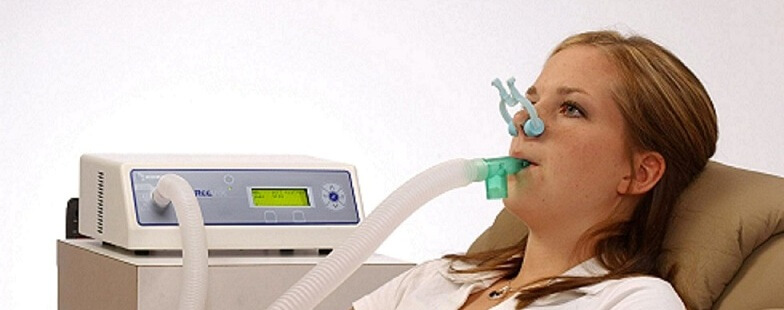
A metabolism test is done by breathing into a device called an indirect calorimeter.

Metabolic Test

The important number to calculate is called your resting metabolic rate.

The resting metabolic rate is the amount of calories your body will expend just to keep you alive.

This number is unique to you based upon the oxygen you expend on a daily basis in a resting state.

The test only takes 10 minutes.

The patient breathes into a tube connected to the device.

Each breath, inhaled and exhaled is analyzed and the final result in computed.

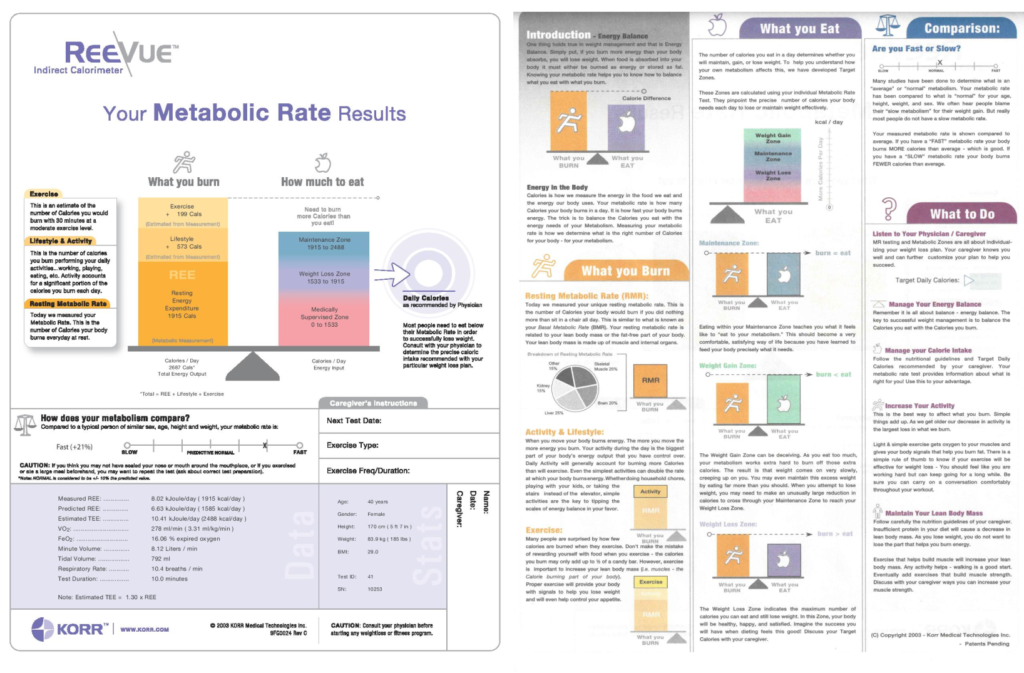
Metabolic Test Results

Metabolic Test Results

Based on your resting metabolic rate number, we can compare you to others your age as well as predict the calories burned while your perform daily activities and exercise.

It is usually surprising to most patients to realize in fact their metabolism is not slow and often times even fast.

This is usually the case for patients who are overweight which is upwards of 70 percent of Americans.

The reason for this is simple. Your body needs to work harder at higher weights to keep you alive.

This hard work translates to burning more calories which explains a higher metabolic rate.

This number called resting energy expenditure is not a variable that can be immediately increased.

However, the number of calories expended with exercise and daily activities can.

This is the key to long term success.

Eating the correct number of calories per day to satisfy your bodies basic energy requirements without going over is the answer to lose weight.

Creating an energy deficit by burning calories through daily activities such as walking, taking the stairs, increasing our steps, household chores, and exercising will get you to your goal weight quicker.

What If I Find Out My Metabolism Is Slow?

There are cases where the metabolism can be slower then normal and we can account to look further into why through lab testing to see if there is a thyroid or metabolic condition present.

Most of the time labs will come back normal.

In this case, we will need to adjust our calories appropriately and work on a long term plan for building a healthier metabolism through a nutrition and exercise program to burn fat and build lean muscle mass.

Finally, consistency is the key to all this for sustainable results.

Your metabolism will likely change over time, and especially with a change in weight.

Measuring this through indirect calorimetry will give you the insight to fuel the body properly, a process we like to call eating to your metabolism.

Written by Dr. Michael Luciano

Dr. Michael Luciano Bucks County, PA


Are you interested in testing your metabolism or medical weight loss? If you live near the surrounding cities of Doylestown, Warrington, Newtown, and Warminster, schedule your appointment with Dr. Luciano  online or by calling us at (267) 332-5567.


Did you enjoy this article? Share it!

You may also like: 7 Reasons Why You Should Try IV Vitamin Therapy Treatments

Popular Med Spa Treatments For Mother of The Bride/Groom

Healthy Solutions Medspa 3 Popular Med Spa Treatments To Help Every Mother of The Bride or Groom Look Her Best

Spring is almost in the air and with it comes wedding season. If you are a mother of the bride or groom, you are not going to want to show up to your child’s wedding looking anything less than fabulous. Healthy Solutions Med Spa has everything you need from facials and weight loss programs, to non-invasive body sculpting treatments to help you look like the best version of yourself.

There was a time when a manicure/pedicure and a facial was considered “party prep.” Today, we’ve got HydraFacials, Botox, teeth whitening, IV vitamin therapy, and non-surgical treatments to help you prepare for that significant milestone.

So what are the latest and greatest Med Spa treatments and services getting done in preparation for the big day? Women and men are turning to CoolSculpting, medical weight loss programs, and Kybella to help them look and feel their best – all offered at Healthy Solutions Med Spa.

CoolSculpting:

Think Spanx! But a more permanent body shaping medical treatment. CoolSculpting is a non-surgical fat reduction treatment that permanently freezes away stubborn fat from areas of the body that don’t respond to diet and exercise such as the abdomen, legs, arms, back, chin, and chest.

This revolutionary technology targets and cools unwanted fat cells in the selected area to induce a noticeable, natural-looking reduction in fat bulges without needles, cutting, stitching, anesthesia, or recovery time. It is safe, FDA-cleared and effective.

If you’re considering showing up in a super sleek gown but don’t want to spend the day sucking in your gut, CoolSculpting can help you achieve a more slender looking abdomen. It can also create more flattering and toned looking arms as well as reduce that annoying bulge from bra fat – so you can feel confident and enjoy one of the most special days of your life. If you are interested in finding out the Coolsculpting cost and looking to find great Coolsculpting reviews, look no further than our Medspa.

To see if you are a Coolsculpting candidate, take our quiz.

Kybella:

Say cheese! If while looking to find your best angle you suddenly discover a double chin, don’t panic. Kybella treatments can help. Kybella is a fat dissolving injectable used on adults to improve the appearance and profile of moderate to severe fat below the chin.

The FDA-approved super shot contains a naturally occurring molecule that melts away fat. The acid will destroy your double chin-causing fat cells, and help you attain a tighter and thinner profile. A series of 2 to 3 treatments are recommended. Best of all, the results are permanent. So grab your selfie stick and schedule a free consultation today.

HCG Diet:

Remember those 10 to 15 pounds you meant to lose but didn’t? If there was ever an occasion to finally do it, your child’s wedding is it!

HCG is a hormone known as human chorionic gonadotropin (hCG). In a very small dose, it has been studied to produce dramatic weight loss by targeting your fat for fuel on a low-calorie diet. Patients average 1 pound a day weight loss and a 30 to 42 day course is common.

While on HCG, patients report decreased appetite and increased energy. The HCG diet is a great strategy to jump-start you on the way to your ultimate goals. It is available in injections, oral drops, and a cream. A free consultation is required before beginning treatment. If you are looking for a medical weight loss doctor in the Bucks County area that offers the HCG diet, call (267) 332-5567

Whether you opt for CoolSculpting, Kybella or HCG Diet – or decide to do them all, you will arrive at your child’s wedding looking and feeling like your absolute best self.

Just make sure to wear waterproof mascara!

Top Three Medical Weight-Loss Questions Answered

Healthy Solutions Medspa If you’ve been carrying around a few extra pounds, you’re certainly not alone—with an estimated 160 million Americans now being identified as either overweight or obese, the fight against fat has never been more urgent. Unfortunately, many dieters find it difficult or seemingly impossible to shed the pounds on their own. Some have even given up on their journey towards health due to a scale that won’t budge. Fortunately there is a great option for people with a Board Certified Obesity Medicine Doctor called Medical Weight Loss.


In seeking ways to lose weight, people in the know have turned to Medical Weight Loss. These medical diet programs are different because they offer guidance and program planning from physicians who have devoted their lives to helping clients maintain a healthy weight. But what is medical weight loss, and how can it help you to reach your goals? Read on to learn three quick facts about medical weight loss.

How does being overweight effect my health?

Carrying around a few extra pounds may not seem like a big deal but living with excess fat can have serious consequences for your long-term health. Doctors have linked an overweight or obese BMI to a host of conditions, ranging from Type-II diabetes to certain types of cancers.

How can Medical Weight Loss help me lose weight?

Medical weight loss differs from other weight loss programs because you’ll have a Physician to help you create a personalized plan that fits your dietary needs and lifestyle. Medical weight loss doctors in our office near Warrington offer personalized consultations, comprehensive medical evaluations, metabolism and body composition testing as well as customized nutrition plans. Dr. Michael Luciano’s Medical Weight Loss programs include incorporating the ketogenic diet, protein supplements, vitamins, lipotropic or b12 injections that help boost your metabolism, weight loss medications, and the options of hormone medications like the HCG diet to help you achieve your ultimate goals. Oversight, accountability, and structure under medical supervision promotes a safe, rapid, and successful weight loss plan.

How will I be able to keep the weight off after I lose it with Medical Weight Loss?

Medical weight loss is more than just lowering the number that you see when you step on the scale—it’s also about creating a realistic plan to avoid post-treatment weight gain. Maintaining muscle mass and focusing on fat loss is necessary for long term maintenance of results. At Doctor Luciano’s office, he monitors his patient’s body composition and metabolism as their weight decreases using the latest technology ensuring that you are on the right track and staying healthy. At Healthy Solutions by Dr. Luciano medspa near Richboro, PA, Dr. Luciano will work with you so you can have a smooth transition from weight loss to maintenance.

Are you ready to walk down the path towards a happier and healthier life today? Schedule your appointment at Healthy Solutions by Dr. Luciano by calling (267) 332-5567 to get started!